top of page
8.jpg
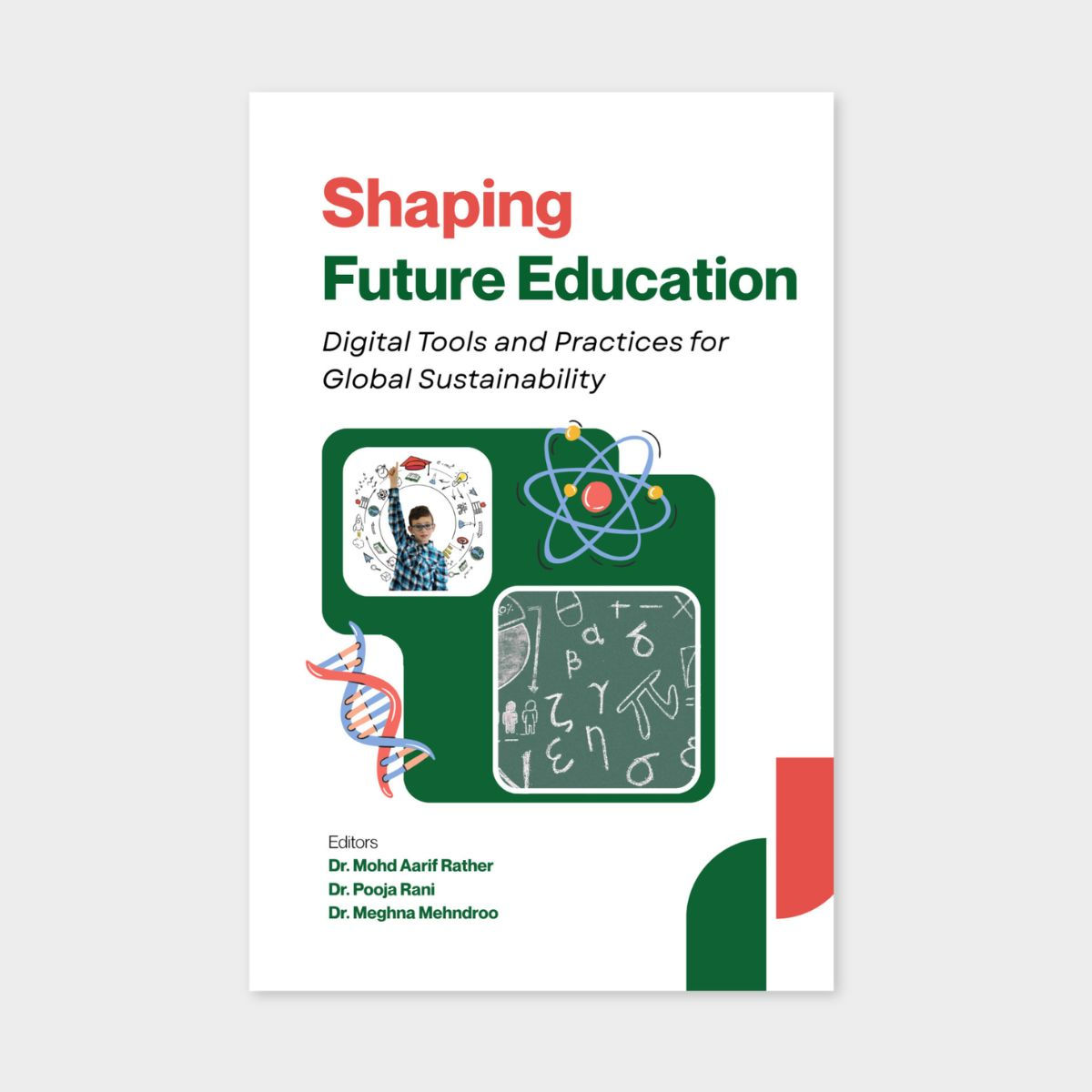
Shaping Future Education: Digital Tools and Practices for Global Sustainability

Dr. Mohd Aarif Rather | Dr. Pooja Rani | Dr. Meghna Mehndroo

ISBN:

978-81-180058-0-3

DoI:

​

2026 | 342 pp.

Price

INR 2995

Please select a format

Shaping Future Education: Digital Tools and Practices for Global Sustainability emerges from this very moment of transition. It is an attempt to capture, in one volume, the many ways in which educators, researchers and scholars across disciplines are rethinking learning for a digital and sustainable future. The chapters gathered here are not confined to a single theme or a single method; instead, they represent a mosaic of perspectives including technological, pedagogical, psychological and social, that together illuminate the complexity of educating in the twenty-first century.


Several threads run through this collection. One is the promise and challenge of emerging technologies in the classroom. Contributors examine how distance learning is reshaping political education in India’s remote regions, how augmented reality is being received by educators still finding their footing with it, and how artificial intelligence is beginning to redefine the very relationship between teacher and learner, moving us toward what one chapter memorably terms “cognitive co-learning”. Others turn a scientometric and analytical lens on digitalization in higher education itself, mapping the trends, innovations and challenges that define this rapidly evolving field.


A second thread concerns sustainability, not as an abstract ideal, but as a practical design principle. Readers will find explorations of green, cloud-based learning management systems, comparative studies of digital learning across conventional and non-conventional modes and reflections on educational technology as a “global technoscape” capable of fostering inclusive and sustainable learning pathways. These chapters remind us that sustainability in education is inseparable from questions of infrastructure, access and institutional will.


A third thread turns inward, toward the learner as a whole person. Chapters in this volume investigate digital addiction and its relationship with sleep among teenagers, the psychological well-being of adolescent girls in the face of cybercrime, the early puberty epidemic and its gendered links to media and lifestyle, and even the therapeutic potential of sound healing for emotional intelligence. Alongside these are studies of digital self-control, mental health outcomes among secondary school students and the well-being dimensions of growing up in an always-connected world. Together, they insist that any conversation about educational technology must also be a conversation about human flourishing.


A fourth thread addresses language, curriculum and teacher preparation; from the integration of AI into English language learning and value-based education, to the redesign of English language teaching curricula, the use of Open Educational Resources in teacher training, and the identification of sustainability indicators within social science curricula. These chapters ground the volume’s larger technological and philosophical questions in the everyday realities of classrooms, syllabi and teacher development.


Finally, several chapters extend the discussion beyond the classroom altogether, examining how digital platforms shape women’s economic empowerment and media participation, and how social media use correlates with learning outcomes among second-language learners; reminding us that education today is porous, reaching far beyond institutional boundaries into homes, communities and digital public life.


What unites these diverse contributions is a shared conviction: that technology thoughtfully and ethically deployed, can be a powerful force for equitable and sustainable education, but only if it is examined critically, tested empirically and implemented with an unwavering attention to the human beings at its center. The scholars whose work appears in this volume come from varied institutional and disciplinary backgrounds, yet each brings rigor, curiosity and a genuine commitment to improving educational practice.

Shaping Future Education: Digital Tools and Practices for Global Sustainability

Shaping Future Education: Digital Tools and Practices for Global Sustainability emerges from this very moment of transition. It is an attempt to capture, in one volume, the many ways in which educators, researchers and scholars across disciplines are rethinking learning for a digital and sustainable future. The chapters gathered here are not confined to a single theme or a single method; instead, they represent a mosaic of perspectives including technological, pedagogical, psychological and social, that together illuminate the complexity of educating in the twenty-first century.


Several threads run through this collection. One is the promise and challenge of emerging technologies in the classroom. Contributors examine how distance learning is reshaping political education in India’s remote regions, how augmented reality is being received by educators still finding their footing with it, and how artificial intelligence is beginning to redefine the very relationship between teacher and learner, moving us toward what one chapter memorably terms “cognitive co-learning”. Others turn a scientometric and analytical lens on digitalization in higher education itself, mapping the trends, innovations and challenges that define this rapidly evolving field.


A second thread concerns sustainability, not as an abstract ideal, but as a practical design principle. Readers will find explorations of green, cloud-based learning management systems, comparative studies of digital learning across conventional and non-conventional modes and reflections on educational technology as a “global technoscape” capable of fostering inclusive and sustainable learning pathways. These chapters remind us that sustainability in education is inseparable from questions of infrastructure, access and institutional will.


A third thread turns inward, toward the learner as a whole person. Chapters in this volume investigate digital addiction and its relationship with sleep among teenagers, the psychological well-being of adolescent girls in the face of cybercrime, the early puberty epidemic and its gendered links to media and lifestyle, and even the therapeutic potential of sound healing for emotional intelligence. Alongside these are studies of digital self-control, mental health outcomes among secondary school students and the well-being dimensions of growing up in an always-connected world. Together, they insist that any conversation about educational technology must also be a conversation about human flourishing.


A fourth thread addresses language, curriculum and teacher preparation; from the integration of AI into English language learning and value-based education, to the redesign of English language teaching curricula, the use of Open Educational Resources in teacher training, and the identification of sustainability indicators within social science curricula. These chapters ground the volume’s larger technological and philosophical questions in the everyday realities of classrooms, syllabi and teacher development.


Finally, several chapters extend the discussion beyond the classroom altogether, examining how digital platforms shape women’s economic empowerment and media participation, and how social media use correlates with learning outcomes among second-language learners; reminding us that education today is porous, reaching far beyond institutional boundaries into homes, communities and digital public life.


What unites these diverse contributions is a shared conviction: that technology thoughtfully and ethically deployed, can be a powerful force for equitable and sustainable education, but only if it is examined critically, tested empirically and implemented with an unwavering attention to the human beings at its center. The scholars whose work appears in this volume come from varied institutional and disciplinary backgrounds, yet each brings rigor, curiosity and a genuine commitment to improving educational practice.

Shaping Future Education: Digital Tools and Practices for Global Sustainability

₹2,995.00Price
Quantity
bottom of page